


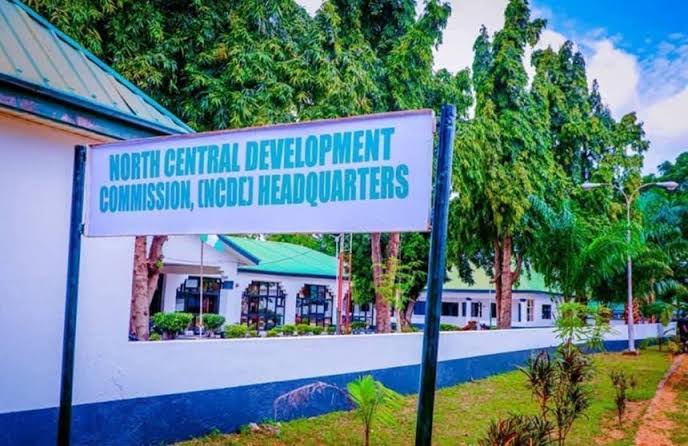
The North Central Development Commission (NCDC) has unveiled a 20-year development roadmap aimed at transforming the region into an integrated economic hub through coordinated investment in infrastructure, agriculture, mining, human capital, security and the digital economy.
The proposed North Central Development Plan 2027–2046, presented at the commission’s Road Map and Stakeholders’ Development Summit in Abuja, seeks to move the region beyond fragmented projects by concentrating resources on catalytic programmes capable of generating jobs, expanding productivity, improving public services and attracting investment.
The two-day summit, held from September 14 to 15, brought together 862 physical participants and 49 online attendees, including representatives of the Federal Government, governors of the six mandate states and the Federal Capital Territory, lawmakers, traditional and religious leaders, development partners, private-sector operators, academics, civil society groups, youth and women organisations.
The plan covers Benue, Kogi, Kwara, Nasarawa, Niger and Plateau States, as well as the FCT.
Presenting the draft plan, the Executive Governor of Nasarawa State and Chairman of the North Central Governors’ Forum, Engr. Abdullahi Sule, highlighted the region’s agricultural and mineral resources, stressing the need to process more of its raw materials locally and translate its economic potential into measurable development outcomes.
The Managing Director and Chief Executive Officer of the NCDC, Dr Cyril Yiltsen Tsenyil, described the summit as the beginning of an inclusive, evidence-led and implementation-focused development process.
In his keynote address, Prof. Iyorwuese Hagher called for the commission to serve as the strategic coordinating institution for an integrated regional economy, with emphasis on peace, value addition, human capital development, technology and disciplined implementation.
Speaking on behalf of President Bola Ahmed Tinubu, the Secretary to the Government of the Federation, Sen. George Akume, endorsed the long-term planning approach and urged the commission to prioritise realistic, high-impact and fundable interventions backed by strong governance, accountability and diversified financing.
The summit noted that despite its strategic location, extensive agricultural land, water, mineral and energy resources, markets and human capital, the North Central region had not consistently converted these advantages into commensurate productivity, industrial capacity, incomes and social outcomes.
It attributed the gap partly to fragmented planning, weak inter-state connectivity, insecurity, infrastructure deficiencies, limited value addition, unreliable data and inconsistent implementation.
A central theme of the communiqué was that security must be treated as productive infrastructure, as agriculture, trade, investment, education and community life cannot thrive where people, assets and transport corridors remain unsafe.
Under the economic development component, the commission is expected to establish a geographic information system-enabled regional economic database to map productive assets, comparative advantages, farms, water resources, minerals, infrastructure gaps and investment opportunities across the region.
The plan also proposes state-specific agricultural and livestock value chains covering inputs, mechanisation, irrigation, storage, processing, packaging, branding, logistics and export, alongside measures to formalise artisanal mining and develop mineral-processing and manufacturing clusters.
The commission is further expected to support micro, small and medium enterprises through skills development, affordable finance, market access and investor incentives, while encouraging states to harmonise investment laws, establish land banks and package viable projects for domestic and foreign investment.
On infrastructure, the summit called for an integrated regional programme linking the six states and the FCT through strategic roads, rail, inland waterways and logistics systems.
It identified the rehabilitation and completion of corridors that unlock agricultural land, markets and investment as an immediate priority, while urging consideration of the Abuja–Lokoja Road, regional rail, Baro inland-port logistics, dry-port connections and modern freight systems.
The plan also provides for a regional energy programme, improved public water supply, irrigation and resilient urban and rural infrastructure, with security, climate resilience, maintenance and technical expertise integrated into project design from the outset.
In the social sector, the proposed roadmap calls for a regional human-capital and social-inclusion database covering children, youth, women, persons with disabilities, indigent households and rural communities.
It seeks to reduce school dropout, strengthen existing schools, address teacher shortages and expand access to quality education, while promoting science, technology, engineering and mathematics, technical and vocational training linked to regional value chains and emerging industries.
The commission also plans to strengthen healthcare access by equipping teaching hospitals and specialised institutions according to their comparative strengths, expanding health-insurance coverage for vulnerable residents and improving access to essential medicines.
On security, the communiqué recommended a coordinated regional framework involving statutory security institutions, traditional authorities and communities, with emphasis on intelligence sharing, early warning, community engagement and inter-state cooperation.
It also proposed assessing the lawful use of satellite imagery, drones and geospatial systems for intelligence, while linking security interventions with livelihoods, youth engagement, rehabilitation, justice, social cohesion and the safe return or resettlement of displaced communities.
The plan’s climate and environmental component includes mapping flood, erosion, drought and mining hazards, strengthening early-warning systems, undertaking flood and erosion control measures and establishing recovery pathways for climate-displaced persons.
It further recommends safeguards before the expansion of mineral extraction and major infrastructure projects, including a regional mining-hazard register, mine-site remediation and ecosystem restoration.
In the digital economy, the NCDC is expected to pursue broadband expansion across the region, establish AI and digital-skills centres, improve teacher training and connect beneficiaries of skills programmes to employers, business-process outsourcing and credible remote-work platforms.
The commission also proposed a dedicated innovation financing mechanism to support technology enterprises, makerspaces, innovation hubs and digital public services, with Abuja positioned as a regional market and digital hub.
To finance the plan, the summit recommended matching funding instruments to the economic character of each project, with commercially viable ventures attracting private investment, projects with strong economic benefits but weaker initial returns using blended finance, and essential non-commercial services receiving appropriate public funding.
It called for a disciplined project-preparation pipeline supported by feasibility studies, financial models, transparent contracts, credible sponsors, risk allocation and maintenance plans before projects are presented to investors.
The summit also recommended the establishment of a Programme Management Office within the NCDC to coordinate flagship programmes, project preparation, financing, implementation support, risk management and performance reporting.
It urged the commission to secure durable legal and institutional backing for the 20-year plan, define responsibilities among federal and state institutions, local governments, communities, investors and development partners, and publish regular performance reports based on verified baselines and measurable targets.
The communiqué was presented by Prof. Mohammed Nuhu and adopted by participants at the close of the summit on Tuesday, September 15, 2026, in Abuja.
The plan’s success will depend on whether its proposed regional coordination, financing and accountability mechanisms can convert the summit’s broad priorities into projects with clear owners, funding and measurable results.
