


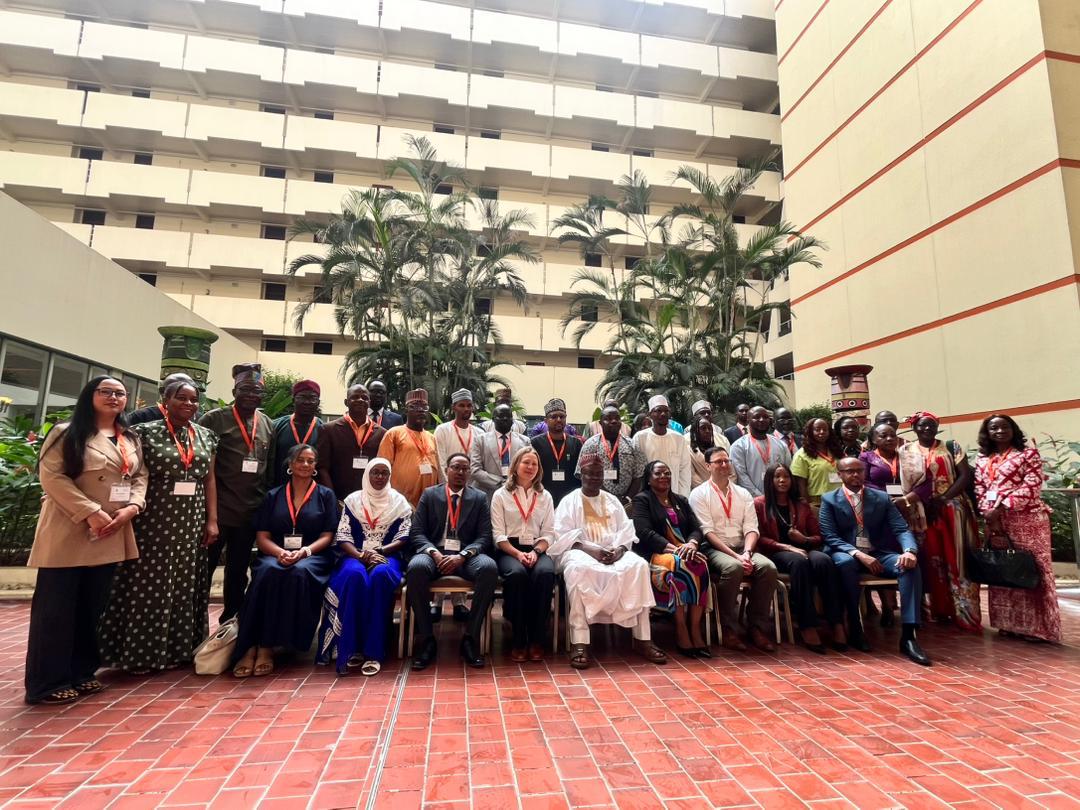
Nigeria has brought together policymakers, climate experts, and peacebuilding practitioners from across Africa in a high-level regional forum aimed at tackling the growing link between climate change and insecurity on the continent.
Declaring the Forum open in Abuja, Permanent Secretary of the Federal Ministry of Environment, Salihu Aminu Usman, warned that the accelerating pace of climate change is already triggering severe global consequences, stressing the need for urgent and coordinated action.
“Climate change impacts are on the rise daily, with unprecedented and extreme weather conditions being experienced all around the world. Urgent solutions are required before it gets out of hand,” he said.
Usman noted that Nigeria remains committed to global climate obligations under frameworks such as the United Nations Framework Convention on Climate Change, the Kyoto Protocol, and the Paris Agreement. He added that the country has pledged to cut greenhouse gas emissions by up to 47 percent with international support.
He revealed that Nigeria’s National Adaptation Plan (NAP), currently nearing completion, incorporates conflict-sensitive approaches, linking climate adaptation directly to peacebuilding efforts.
According to him, environmental pressures are increasingly tied to security challenges such as farmer-herder clashes, banditry, and cattle rustling.
“It would be a mistake to ignore adaptation needs in these peacebuilding contexts,” Usman said, underscoring the importance of aligning climate policies with national security strategies.
In her remarks, Director of the Department of Climate Change, Iniobong Abiola-Awe, highlighted the widespread impact of climate variability on infrastructure, biodiversity, and livelihoods, warning that these disruptions are deepening existing vulnerabilities and contributing to instability.
She said Nigeria’s adaptation planning process has been inclusive and participatory, designed to address medium- and long-term climate risks while strengthening resilience across sectors.
Also speaking, Alec Crawford of the International Institute for Sustainable Development stressed that climate change is no longer a future threat but a present reality, particularly in fragile and conflict-affected regions.
“The intersection between climate risks, war, and conflict is no longer abstract,” Crawford said, adding that adaptation strategies must not only respond to environmental challenges but also actively support peacebuilding efforts.
He commended Nigeria for hosting the forum and acknowledged financial support from the Government of Ireland.
The Forum has drawn participation from several African countries, including Burkina Faso, Cameroon, Central African Republic, Chad, Liberia, Mali, Somalia, and South Sudan.
Organisers say discussions will centre on integrating peacebuilding into climate adaptation planning, sharing country experiences, and strengthening collaboration among environment, security, and development stakeholders.
The Forum runs through May 7, featuring technical sessions, policy dialogues, and peer learning aimed at shaping a more coordinated African response to the climate-security challenge.
