


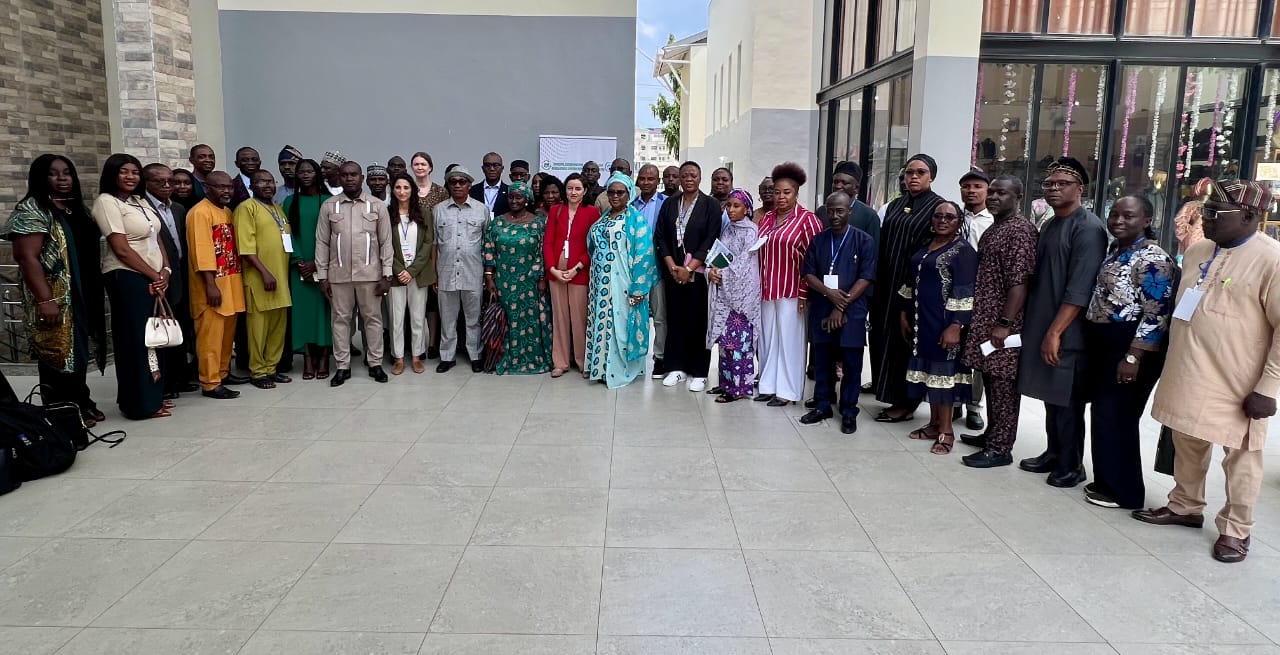
Nigeria, Guinea-Bissau and Sierra Leone are moving to overhaul their waste management frameworks, with stakeholders in the three countries calling for stronger laws, better institutional coordination and the integration of informal waste workers into systems designed to protect public health and the environment.
The move followed the conclusion of a UNEP-supported project aimed at developing environmentally sounder and safer waste management frameworks across the three countries, amid growing pressure on governments to address the environmental and social consequences of poorly managed waste.
At a two-day Final Regional Closing Workshop hosted by the Nigeria’s National Environmental Standards and Regulations Enforcement Agency (NESREA), stakeholders reviewed and validated the project’s findings, legislative proposals and recommendations, setting out pathways for implementation, resource mobilisation and long-term sustainability.
The workshop also placed emphasis on gender inclusion, the protection of children’s rights and the need to recognise the contribution of the informal waste sector, whose activities are often central to waste collection, sorting and recovery but may not be adequately covered by formal regulatory systems.
Declaring that the project had provided a basis for addressing persistent weaknesses in waste governance, the Director-General of NESREA, Prof. Innocent Barikor, said the next challenge was to translate its outcomes into concrete reforms.
He said the participating countries would develop a post-project implementation and sustainability roadmap to guide policy and legislative changes, strengthen institutional capacity and improve waste management outcomes.
“Together we shall produce a set of concrete post-project implementation and sustainability roadmap that will inform policy and legislative reforms, strengthen institutional capacity, ensure gender inclusion, protect the rights of the children and improve overall waste management outcomes,” Barikor pledged.
The NESREA Director General said the initiative was particularly relevant to Nigeria’s drive towards a circular economy and resource efficiency, linking improved waste management to economic growth and environmental protection.
The circular economy approach seeks to reduce waste by keeping materials and products in use for as long as possible through prevention, reuse, recycling and recovery, rather than relying primarily on disposal. For countries facing increasing volumes of waste, the approach also offers an opportunity to recover economic value from materials that would otherwise be discarded.
However, stakeholders at the workshop stressed that achieving such a transition would require more than policy declarations. They called for clearer legal responsibilities, stronger technical capacity, effective enforcement and sustained financing to ensure that waste management reforms are implemented beyond the life of the project.
The Deputy Minister of Environment of Sierra Leone, Hon. Mima Yema Mimi Sobba-Stephens, said the changing nature of waste streams had made comprehensive regulation increasingly urgent.
She identified plastics, healthcare waste, electronic waste, used oils, chemicals and mining-related waste among the emerging and hazardous waste streams requiring clearer rules, stronger technical capacity and more effective oversight.
“Through consultation and technical review, we have identified the need for a comprehensive and harmonised legal framework that addresses the full waste hierarchy: prevention, reduction, reuse, recycling, recovery and, only as a last resort, environmentally sound disposal,” she said.
Her remarks underscored the need for waste management systems to move beyond the traditional focus on collection and disposal to a hierarchy that prioritises prevention and reduction, followed by reuse, recycling and recovery, with disposal reserved as a last resort.
For Guinea-Bissau, the project also provided an opportunity to address the role of workers operating outside formal waste management structures.
The Director of Chemical Product Waste Service in the country, Per Infali Cassama, said the initiative had enabled Guinea-Bissau to recognise the contribution of the informal sector and created a platform for engagement among stakeholders at different levels.
The inclusion of the informal sector is significant because waste pickers and other informal operators often contribute to the recovery of recyclable materials, even where formal systems remain limited. Stakeholders said future frameworks must therefore combine environmental safeguards with measures that recognise and protect the people whose livelihoods depend on waste recovery.
Representing Nigeria’s Minister of Environment, Balarabe Lawal, the Director of Pollution Control and Environmental Health, Mrs Omotunde Adeola, described the workshop as the beginning of implementation rather than the conclusion of the reform process.
“These initiatives are essential for improving waste management practices, strengthening environmental compliance, and delivering tangible benefits to communities across Nigeria,” she said.
Also speaking, Valentina Ricca of the UNEP Law Division said the project, which commenced in 2023, was designed to strengthen waste management frameworks while supporting the inclusion and protection of the informal waste sector.
The closing workshop therefore marked the transition from technical reviews and stakeholder consultations to the more difficult task of implementing the proposed reforms. Its recommendations are expected to guide legislative and institutional action in the three countries, with the broader objective of establishing waste management systems that are safer, more coordinated and better equipped to respond to changing waste streams.
For Nigeria, the process comes as the country seeks to align environmental regulation with resource efficiency and circular economy principles, making the effectiveness of the proposed reforms dependent on the ability of institutions to enforce standards, mobilise resources and sustain collaboration beyond the project’s formal completion.
