



By Daniel Oluwatobiloba Popoola
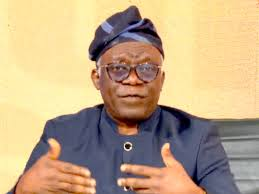
Human rights lawyer and Senior Advocate of Nigeria, Femi Falana, has warned that Nigeria cannot credibly spearhead the fight against rising military coups in West Africa without first confronting the deep-rooted socioeconomic and political problems fuelling discontent within its own borders.

Speaking on Channels Television’s Politics Today on Tuesday, 9 December, 2025, Falana said Nigeria’s internal instability undermines its ability to promote democratic governance across the region.
He argued that issues such as poverty, economic hardship, illiteracy and widespread insecurity continue to weaken the country’s political foundations and must be urgently addressed.
“If we want to have political stability in Nigeria, you must address the crisis of the economy, address poverty, tackle illiteracy, and curb insecurity of lives and property,” he said.
Falana cautioned against the increasing crackdown on civic freedoms, describing the shrinking political space and the criminalisation of dissent as threats to democracy.
He condemned the tendency of government agencies to charge citizens with frivolous offences for criticising public affairs.
He also challenged the Independent National Electoral Commission (INEC) to broaden political participation by registering ideological parties capable of offering Nigerians meaningful alternatives to the status quo.
According to him, the current environment discourages political diversity and encourages a creeping one-party structure.
“Nigeria clearly has its job cut out. If you want to stop coups, you must allow political pluralism. You cannot have a situation where the country is moving towards a one-party state and you want to export democracy,” he stated.
Falana linked the resurgence of coups in the sub-region to the suppression of opposition voices, noting that political instability is inevitable in societies where rivals are jailed, forced into exile or eliminated. “It won’t be the last,” he warned, predicting continued unrest if leaders across Africa keep silencing dissent.
His remarks came days after a failed coup attempt in Benin Republic, where mutinous soldiers led by Lt. Col. Pascal Tigri briefly seized the state television station in Cotonou, announcing the removal of President Patrice Talon.
The uprising was swiftly crushed by Nigerian forces and ECOWAS’ standby troops, leaving several people dead and at least 14 suspects in custody.
The African Union, United Nations, European Union and ECOWAS condemned the attempted takeover, as the Nigerian Senate approved President Bola Tinubu’s request to deploy troops to help stabilise Benin.
Falana insisted that Nigeria must demonstrate democratic leadership by fixing its internal contradictions, strengthening opposition parties and ensuring free political expression if it hopes to play a credible role in defending democracy across West Africa.
