


By Daniel Oluwatobiloba Popoola
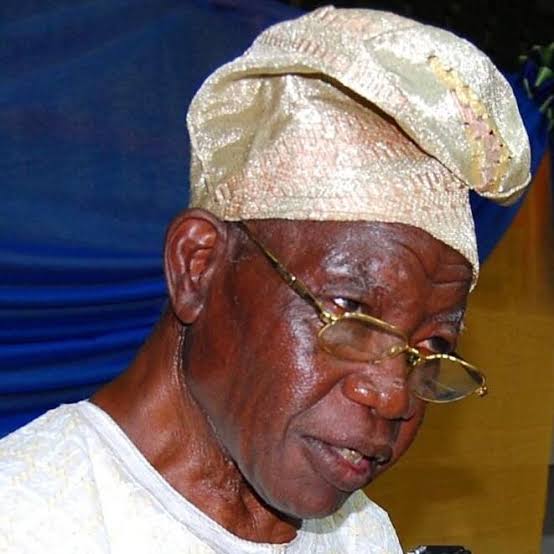
Lagos State Governor Babajide Sanwo-Olu, Professor Lai Olurode and Professor Sylvester Akhaine have urged Nigerians, particularly public office holders, to embrace the leadership ideals of the late former Governor of Lagos State, Alhaji Lateef Jakande, describing his legacy of selfless service, integrity, patriotism and people-oriented governance as a template for national development.
They made the call on Thursday, 23 July, 2026 at the fourth Lateef Jakande Memorial Lecture organised by the Nigerian Guild of Editors (NGE) at the Sheraton Hotel, Ikeja, Lagos.
The annual lecture series, instituted by the Guild in 2023, is aimed at preserving the legacy of the late journalist, former Lagos State governor, ex-Minister of Works and one-time President of the NGE, while promoting the ideals of ethical journalism, exemplary leadership and public service.
Represented by the state Commissioner for Information and Strategy, Mr Gbenga Omotoso, Governor Sanwo-Olu described Jakande as one of the finest examples of how journalism prepares individuals for leadership and effective public service.
The Governor noted that the late statesman demonstrated that journalists possess the discipline, vision and competence required to excel in governance, adding that his administration in Lagos remained a reference point for purposeful leadership.
He further observed that journalism equips practitioners with the skills needed to succeed in any assignment once they are committed to excellence, stressing that Jakande proved that journalists could become outstanding administrators and public servants.
Sanwo-Olu also challenged media practitioners to uphold professionalism and intensify efforts to combat the growing menace of fake news in the country.
Chairman of the occasion, Professor Lai Olurode, described Jakande’s unwavering commitment to Nigeria as the defining feature of his life and public service.
According to him, the late former governor never travelled abroad for medical treatment throughout his tenure because of his strong belief in Nigeria’s potential and his conviction that the country possessed the capacity to meet the needs of its citizens.
Olurode recalled that whenever he was asked why he refused to seek medical care overseas despite prevailing challenges, Jakande consistently maintained that Nigeria was a nation with enormous potential and one that people from Europe and Asia should aspire to visit.
He added that even after leaving office, Jakande remained committed to serving humanity, noting that his residence was constantly filled with people seeking employment opportunities and various forms of assistance.
The university don, therefore, urged Nigerians to shift attention from what they expected to gain from the country to the contributions they could make towards its development.
Earlier, President of the Nigerian Guild of Editors, Mr Eze Anaba, said the memorial lecture was established to preserve Jakande’s ideals of ethical journalism, exemplary leadership and selfless public service.
Anaba recalled that Jakande and other founding members established the Guild in 1961 at a period of political and economic uncertainty comparable to present-day realities.
He consequently urged journalists to remain professional, accurate and impartial as the country prepares for future elections, while also calling on the Independent National Electoral Commission (INEC) to continue discharging its constitutional responsibilities with transparency, competence and impartiality.
According to him, a professional media and a transparent electoral management body would ensure that Nigerians were adequately informed to make choices capable of strengthening the country’s democracy.
Delivering the memorial lecture, Professor of Political Science at Lagos State University, Professor Sylvester Akhaine, described the Jakande administration as a model that continues to offer valuable lessons for contemporary governance.
He said the achievements recorded during the Second Republic demonstrated that good governance was attainable in Nigeria, adding that the Jakande years remained a useful benchmark for evaluating the contradictions of the Fourth Republic.
Akhaine maintained that the period reinforced the belief that another Nigeria remained possible if leadership was anchored on vision, accountability and service.
Speaking on the theme of the lecture, he urged the media, INEC and the electorate to faithfully discharge their respective responsibilities in strengthening Nigeria’s democracy.
He stressed that while the media must remain committed to truth and accuracy, INEC should continue improving electoral transparency, just as voters should reject financial inducement from politicians.
The political scientist further advocated sustained voter education and stronger institutional reforms as essential measures for enhancing the credibility of future elections.
Also speaking, the matriarch of the Jakande family, Mrs Sikirat Jakande, urged Nigerians to draw enduring lessons from the life of the late statesman.
She recalled that Jakande transformed the lives of millions through his free education and healthcare programmes, housing projects and extensive road construction across Lagos State, noting that his achievements have continued to earn him lasting recognition years after his death.
She added that his legacy remained relevant for future generations because of his unwavering commitment to improving the welfare of ordinary citizens.
Speaking on behalf of the family, Mr Deji Jakande said the annual memorial lecture had continued to remind members of the Jakande family of their responsibility to protect the late statesman’s name, reputation and enduring legacy.
The event attracted the Chairman of Odi-Olowo/Ojuwoye Local Council Development Area and son of the late Jakande, Mr Seyi Jakande; media icon, Pa Sam Amuka-Pemu; senior journalists, public officials, communication students, scholars and civil society representatives.
