


By Daniel Oluwatobiloba Popoola
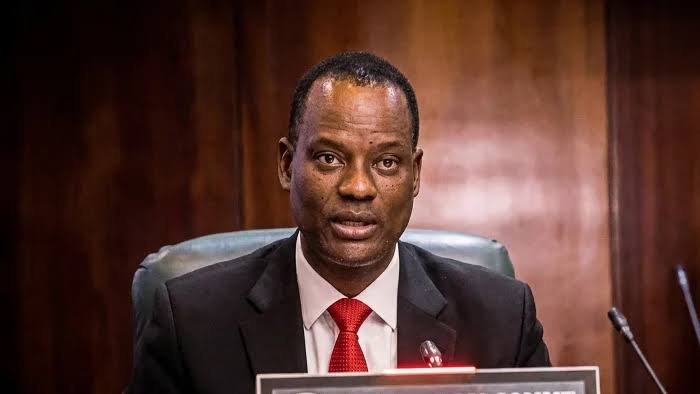
Finance Minister and Coordinating Minister of the Economy, Taiwo Oyedele, has declared that Nigeria is firmly on course for investment grade status, describing Moody’s revision of the country’s sovereign credit outlook from stable to positive as an important external validation of the Tinubu administration’s three-year reform programme.
Moody’s announced the decision on Friday, 28 August, 2026, affirming Nigeria’s long-term foreign and local currency issuer ratings at B3 while upgrading the outlook, citing stronger external buffers, rising foreign exchange reserves and sustained reform momentum. The Federal Ministry of Finance welcomed the action on Friday, August 29, 2026.
Oyedele said the Moody’s action confirms that the administration’s most consequential and politically difficult decisions are working.
“Moody’s positive outlook is an important external validation of the difficult but necessary reforms this administration has implemented, from removing a costly and inequitable fuel subsidy to unifying the exchange rate, and the landmark tax reforms,” he said.
“These decisions are restoring the fundamentals of macroeconomic stability: stronger reserves, a resilient external position, moderating inflation, and more credible policy transmission.”
He said the administration’s medium-term ambition is to place Nigeria on the path to investment grade, requiring sustained progress on domestic revenue mobilisation, spending efficiency and debt affordability.
“We are committed to doing the work required to get there, not for the rating itself, but because the underlying reforms are what will lower Nigeria’s cost of capital, crowd in private investment, and deliver shared prosperity for Nigerians,” he said.
The numbers behind the upgrade are equally compelling. Moody’s projected Nigeria’s current account surplus to widen to approximately 6.1 per cent of GDP in 2026, with gross external reserves climbing to $53.30 billion as of August 26, 2026, according to Central Bank of Nigeria data. Real GDP growth reached four per cent in 2025 against earlier projections of three per cent, with similar expansion anticipated through 2027, supported by non-oil sector activity and rising oil output. Headline inflation fell to 15.4 per cent in July 2026 from 25.3 per cent a year earlier.
The Moody’s action is the latest in a sequence of positive international assessments. FTSE Russell reclassified Nigeria from Unclassified to Frontier Market status on Thursday, 27 August, 2026. S&P Global Ratings upgraded Nigeria to B from B- in May 2026.
Fitch affirmed Nigeria at B with a stable outlook. Together, the actions reflect a converging and increasingly favourable view of Nigeria’s economic direction among the world’s major rating agencies.
The Federal Ministry of Finance reaffirmed its commitment to deepening domestic revenue mobilisation through tax reform, sustaining a disciplined and transparent foreign exchange regime, strengthening public debt management, maintaining fiscal discipline in coordination with subnational governments and advancing structural reforms to support non-oil growth and diversify government revenue.
The Ministry noted Moody’s guidance that a further upgrade could follow if Nigeria’s external position improvement is sustained or if revenue reforms succeed in durably increasing government receipts ;both of which remain central pillars of the administration’s economic strategy.
