


By Oluwole Solanke PhD, FCIB
There are virtues that are easy to preach but difficult to practise. Humility is one of them.
Everybody admires a humble person, until humility requires them to surrender their ego.
We celebrate humility when we see it in others, but we often struggle to practise it ourselves. We want leaders who listen, but we want our own opinions to prevail. We want people in authority to respect us, but we sometimes treat those beneath us with contempt. We praise modesty while secretly craving recognition.
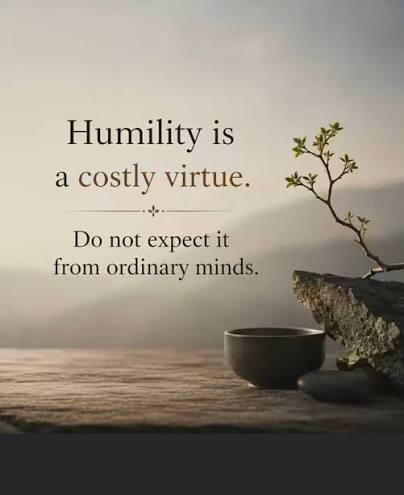
That is why humility is a costly virtue.
It costs the proud person his ego.
It costs the powerful person his sense of superiority.
It costs the successful person the desire to remind everyone of his achievements.
It costs the leader the temptation to believe that the position belongs to him personally.
And perhaps most importantly, it costs us the illusion that we are better than everyone else.
- Humility Is Not Weakness
One of the greatest misunderstandings about humility is that it means weakness.
It does not.
A humble person can be highly educated, exceptionally successful, wealthy, influential and powerful, and still remain approachable.
Humility does not require you to deny your achievements. It requires you to remember that your achievements do not make you superior to other human beings.
You can occupy the highest office and still speak respectfully to the person at the lowest level.
You can have a PhD and still listen to someone without formal education.
You can be a professor and still learn from a cleaner.
You can be a chief executive and still admit, “I was wrong.”
You can be a leader and still say, “Thank you.”
That is strength.
C.S. Lewis captured the deeper meaning of humility in Mere Christianity. He described the genuinely humble person as someone who is not preoccupied with himself.
True humility does not make you smaller; it makes your ego smaller.
- Why Is Humility So Costly?
Because the human ego is expensive.
The ego wants recognition.
The ego wants applause.
The ego wants to be consulted.
The ego wants to win every argument.
The ego wants people to know who I am.
The ego says:
“Do you know who I am?”
Humility says:
“It is not about who I am; it is about what I can contribute.”
That is a profound difference.
An ordinary mind often measures greatness by how many people bow before it.
A mature mind measures greatness by how many people become better because of it.
- Position Does Not Automatically Produce Character
One of the saddest realities of leadership is that promotion can change a person’s behaviour without changing the person’s character.
Give an insecure person power and you may discover arrogance.
Give a selfish person authority and you may discover oppression.
Give an immature person wealth and you may discover extravagance.
Give an ordinary mind a title and it may mistake the title for intelligence.
But give a person of character power, and something beautiful happens:
Power becomes service.
That is why leadership is not merely about occupying a position. It is about possessing the character necessary to carry the position responsibly.
A title can announce your office.
Only character can explain your worth.
- The Higher You Rise, the More Humble You Should Become
There is something deeply wrong when people become increasingly arrogant as they become increasingly successful.
The higher we rise, the more people we should remember.
Nobody succeeds entirely alone.
Behind every professor is a teacher.
Behind every successful entrepreneur are customers, employees, mentors and supporters.
Behind every leader are people who trusted him or her.
Behind every professional qualification are parents, teachers, institutions and circumstances that contributed to the journey.
Maya Angelou expressed this beautifully in her reflections on humility and responsibility: we should recognise that others came before us and that we have a responsibility to prepare the way for those who come after us.
Success should increase our gratitude, not our arrogance.
- The Truly Humble Person Does Not Need to Announce Humility
There is a strange contradiction in humility.
The moment you begin telling everyone how humble you are, your humility becomes questionable.
The genuinely humble person does not constantly advertise his modesty.
He simply behaves differently.
He gives credit.
He listens.
He apologises.
He appreciates.
He forgives.
He acknowledges the contribution of others.
He does not need to dominate every conversation.
He does not have to be the smartest person in the room.
He does not become uncomfortable when another person succeeds.
C.S. Lewis warned that even humility can become another source of pride when we become proud of being humble.
That is the paradox:
You can become proud of your humility.
And once that happens, humility has quietly left the building.
- Ordinary Minds Often Confuse Authority With Superiority
This is particularly dangerous in leadership.
Some people believe that because they have authority, everybody must agree with them.
They confuse obedience with respect.
They confuse fear with loyalty.
They confuse silence with agreement.
They confuse position with wisdom.
But leadership is not a licence to humiliate people.
A truly intelligent leader understands that disagreement is not necessarily disloyalty.
Sometimes the person who challenges you is the person protecting you from making a terrible mistake.
The wise leader therefore asks:
“What can I learn from this person?”
The insecure leader asks:
“How dare this person question me?”
That is the difference between maturity and mediocrity.
- Humility Makes Great Leaders Accessible
The best leaders do not build walls around themselves.
They create bridges.
People should be able to approach them with ideas, concerns and even uncomfortable truths.
A leader who cannot tolerate correction eventually becomes surrounded by people who tell him only what he wants to hear.
And that is dangerous.
Because when everybody around you is afraid to tell you the truth, you become the last person to know what is actually happening.
Humility keeps the door open.
It says:
“I may be the leader, but I do not know everything.”
That sentence alone can save an institution from many disasters.
- Humility Is Especially Important in Higher Education
In universities and polytechnics, intellectual ability can sometimes create a dangerous illusion of superiority.
Academic qualifications are valuable.
Titles matter.
Research matters.
Experience matters.
But none of these automatically guarantees wisdom.
A person may have several degrees and still lack emotional intelligence.
Someone may have become a professor and still not know how to treat people with dignity.
Someone may occupy a senior management position and still be incapable of listening.
Higher education institutions therefore need something beyond intellectual intelligence.
They need character intelligence.
The truly great academic leader understands:
“My knowledge gives me responsibility, not superiority.”
A Dean should not become too important to listen.
A Rector should not become too important to apologise.
A Vice-Chancellor should not become too important to learn.
A professor should not become too important to say, “I don’t know.”
And a junior staff member should not be treated as though his or her dignity is smaller.
- Humility Creates a Legacy; Arrogance Creates a Warning
People may forget your salary.
They may forget your official vehicle.
They may forget your office.
They may even forget your title.
But they will remember how you made them feel.
They will remember the leader who encouraged them.
The boss who defended them.
The professor who believed in them.
The administrator who listened to them.
The senior colleague who opened a door for them.
Likewise, they will remember the person who humiliated them.
The leader who abused power.
The superior who treated everyone beneath him as insignificant.
Positions are temporary.
Reputations have longer memories.
- The Greatest Test of Humility Is How You Treat People Who Cannot Help You
This may be one of life’s most important tests.
How do you treat the security guard?
How do you speak to the cleaner?
How do you respond to a junior employee?
How do you treat a student who cannot give you anything?
How do you behave toward someone who has no political influence?
How do you speak to someone who cannot promote you?
Because it is easy to be respectful to the powerful.
Character is revealed by how we treat the powerless.
Anyone can bow before the rich.
Anyone can smile at the powerful.
Anyone can flatter the person who controls their future.
But genuine humility remains respectful even when there is absolutely nothing to gain.
- Humility Requires Self-Awareness
The first step toward humility is recognising that we are not perfect.
C.S. Lewis made a powerful observation in Mere Christianity: the first step toward acquiring humility is recognising one’s own pride.
That is profound.
Before we ask:
“Why are other people so arrogant?”
we should ask:
“Where does arrogance live inside me?”
Before we condemn the proud, we should examine our own pride.
Before we complain that nobody listens to us, we should ask whether we listen to others.
Before we demand respect, we should examine how respectfully we treat people.
Humility begins with honest self-examination.
- The Humble Person Understands That Everything Can Change
Life has a remarkable way of rearranging people’s circumstances.
Today you may be the boss.
Tomorrow someone else may occupy your office.
Today you may have influence.
Tomorrow you may need the help of someone you once ignored.
Today people may celebrate your achievements.
Tomorrow another generation may take your place.
This is why wisdom teaches us not to become intoxicated by temporary success.
The position is temporary.
The privilege is temporary.
The applause is temporary.
The wealth is temporary.
The body is temporary.
But the character you leave behind can influence generations.
- Humility Is Not Thinking You Are Nothing
Humility does not mean saying:
“I am useless.”
That is not humility. That is self-devaluation.
Humility says:
“I know my strengths, but I also recognise my limitations.”
It says:
“I have achieved much, but others have helped me.”
It says:
“I am knowledgeable, but I can still learn.”
It says:
“I am a leader, but I am also a servant.”
It says:
“I have authority, but I must use it responsibly.”
That is mature humility.
- Why Ordinary Minds Struggle With Humility
The phrase “ordinary minds” in this context should not mean people with little education or intelligence.
It refers to undeveloped minds, people who have not matured emotionally, morally or spiritually.
An educated person can have an ordinary mind.
A wealthy person can have an ordinary mind.
A professor can have an ordinary mind.
A politician can have an ordinary mind.
A leader can have an ordinary mind.
Because intellectual achievement and character development are not the same thing.
Education can increase knowledge without increasing wisdom.
That is why some highly educated people know a great deal but understand very little about humanity.
- The Most Powerful Person in the Room May Be the Quietest
Humility does not need to shout.
It does not need to intimidate.
It does not need to remind everyone of its credentials.
It does not need to display wealth.
It does not need to dominate every conversation.
Sometimes the most powerful person in the room is the one who listens carefully, speaks thoughtfully and gives others room to shine.
As an old wisdom teaches:
“A tree with the deepest roots does not need to announce how firmly it is standing.”
True greatness is often quiet.
- The Biblical Model of Humility
For Christians, humility has an even deeper meaning.
Jesus demonstrated that greatness is not measured merely by status but by service.
The biblical principle is clear:
“Whoever wants to become great among you must be your servant.” — Matthew 20:26
That completely reverses the world’s definition of greatness.
The world says:
“Make people serve you.”
Christ says:
“Learn to serve others.”
The world says:
“Show them how important you are.”
Christ says:
“Use your importance to lift others.”
The world says:
“Climb over people.”
Christ says:
“Lift people as you climb.”
That is the revolutionary power of humility.
- Humility Is a Leadership Investment
Humility may appear costly in the short term, but its returns are enormous.
It builds trust.
It attracts loyalty.
It encourages openness.
It reduces conflict.
It improves relationships.
It makes correction possible.
It creates room for innovation.
It develops younger leaders.
It strengthens institutions.
And perhaps most importantly, it allows a leader to leave behind people rather than monuments.
A leader’s greatest achievement should not be that everyone remembers his name.
It should be that many people can say:
“Because of that person’s leadership, I became better.
- Final Reflection
Humility is costly because it demands something that pride hates:
self-control.
It requires you to sometimes remain silent when you could boast.
To apologise when you could defend yourself.
To listen when you could dominate.
To give credit when you could take it.
To serve when you could command.
To forgive when you could retaliate.
To remain teachable after becoming successful.
And to remember that no human being is self-made.
So, do not mistake humility for weakness.
Do not mistake confidence for arrogance.
Do not mistake authority for superiority.
And never assume that a person’s title is evidence of character.
Titles tell us where someone sits.
Humility tells us who they are.
In the final analysis, the truly great person is not the one who makes everyone feel small.
The truly great person is the one whose presence makes other people realise that they too can become great.
That is why humility is a costly virtue.
And sadly, not every mind is developed enough to afford it:
“The higher we rise, the more we should remember the hands that helped us climb.”
“Power reveals character; humility refines it.”
“A small mind uses authority to elevate itself; a great mind uses authority to elevate others.”
“The greatest evidence of greatness is not how many people serve you, but how many people you are willing to serve.”
“When position becomes more important than people, leadership has already begun to lose its soul.”
And perhaps the greatest lesson of all:
“You do not become smaller by lifting others. You become greater.”
