


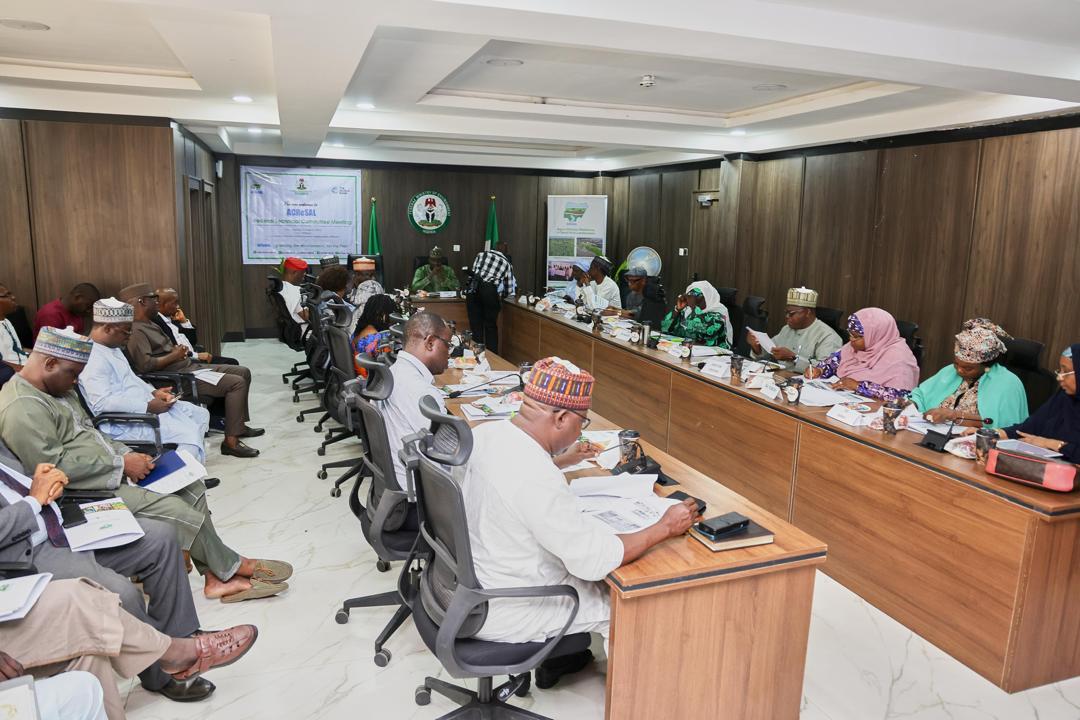
The Federal Government of Nigeria, through the collaborative efforts of the Ministries of Environment, Water Resources and Sanitation, and Agriculture and Food Security, remains committed to combating climate change and environmental degradation, with the ACReSAL project yielding tangible results in restoring degraded lands and promoting sustainable livelihoods in the semi-arid region of the country.
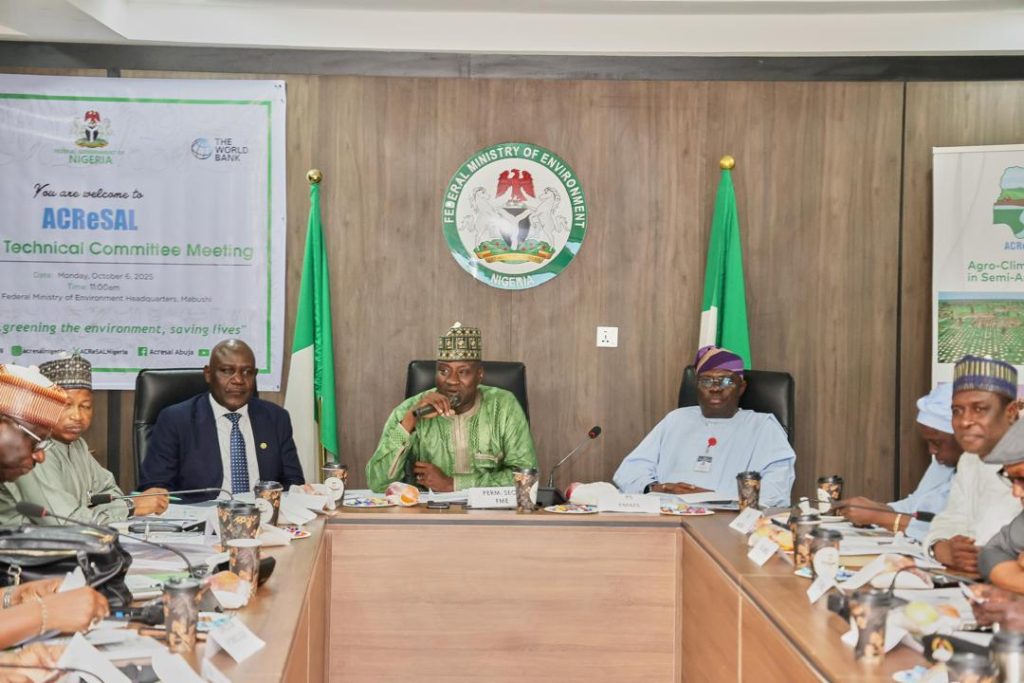
This resolve was emphasized during the Federal Technical Committee (FTC) meeting of the Agro-Climatic Resilience in Semi-Arid Landscapes (ACReSAL) Project, held at the Federal Ministry of Environment in Abuja.
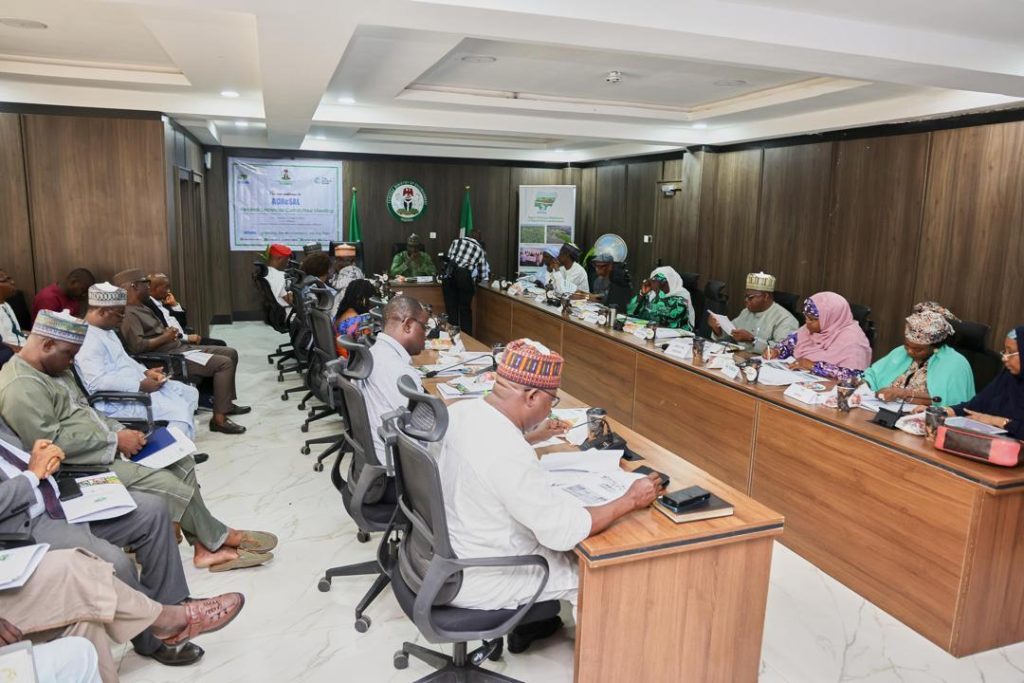
The meeting was attended by the Permanent Secretaries of the three implementing ministries, key Director Generals, Directors, and other ACReSAL Project stakeholders from federal ministries, departments, and agencies to review the project’s progress and examine its Annual Work Plan for the upcoming implementation year.
Delivering the opening remarks, the Permanent Secretary, Federal Ministry of Environment, Mr. Mahmud Adam Gambari, described the gathering as a defining moment in Nigeria’s pursuit of environmental sustainability and community resilience.
“As we confront the realities of climate change, drought, and food insecurity, our shared vision through ACReSAL is transforming into concrete action,” he said. “This plan embodies our collective responsibility to restore degraded lands, strengthen livelihoods, and secure a sustainable future for millions of Nigerians.”
From the agriculture sector, the Permanent Secretary, Federal Ministry of Agriculture and Food Security, Dr. Marcus Ogunbiyi, reaffirmed the ministry’s full support for the project’s objectives.
“The ACReSAL project aligns perfectly with our mission to strengthen food security through climate-smart agriculture,” he stated. “By promoting drought-tolerant crops, soil restoration, and improved farming practices, we are empowering smallholder farmers and building resilience in rural communities. Together, we can ensure that our agricultural sector continues to thrive despite environmental challenges.”
The Permanent Secretary, Federal Ministry of Water Resources and Sanitation, Mr. Richard Philaangwa, highlighted the project’s critical role in protecting Nigeria’s water ecosystems and improving sanitation standards in semi-arid regions.
“ACReSAL offers a comprehensive approach to managing our fragile water systems,” he noted. “Through watershed rehabilitation, sustainable irrigation, and rainwater harvesting, we are not only preserving water resources but also enhancing public health and agricultural productivity. Our ministry remains committed to providing the technical leadership necessary to advance water security across the country.”
Following the remarks by the Permanent Secretaries, the National Project Coordinator (NPC) of ACReSAL, Abdulhamid Umar, delivered a presentation on the project’s current status and impact across the participating states.
He noted that ACReSAL’s interventions are technologically driven and encompass afforestation, reforestation, ecosystem restoration, erosion and flood control, livelihood initiatives, climate-smart agriculture, water management, capacity building, policy development, strategic catchment management planning, institutional strengthening, and environmental education initiatives—all geared toward long-term impacts and sustainable environments.
Mr. Umar revealed that so far, the project has restored over 800,000 hectares of degraded landscapes. He added that civil works have reached an almost completion stage in some states.
He further stated that out of the wide range of impactful activities implemented in the state, 8,708,291 persons have benefited from the project intervention, with 4,120,649 being women.

According to him, ACReSAL has successfully addressed numerous environmental challenges, including those that once plagued communities in the Nguru Wetlands and Hadejia axis of the Northeast—now cited as classical examples of the project’s transformative impact.
The Permanent Secretaries commended the collaboration among the three ministries and stakeholders, stressing that the FTC’s recommendations would be forwarded to the Federal Steering Committee (FSC), chaired by the Honourable Ministers of Environment, Water Resources and Sanitation, and Agriculture and Food Security, for approval.
The Agro-Climatic Resilience in Semi-Arid Landscapes (ACReSAL) project seeks to mitigate the impacts of climate change in northern Nigeria by restoring degraded lands, improving water management, increasing agricultural yields, and promoting sustainable livelihoods.
The meeting concluded with a collective call for continued inter-ministerial synergy to ensure that ACReSAL delivers measurable benefits to communities most affected by desertification, drought, and land degradation.
In a show of courtesy, the committee paid a visit to the Hon. Minister of Environment, Malam Balarabe Abbas Lawal, at the end of the meeting, which took place at the Ministry of Environment Headquarters, Abuja.
