


By Seye Oladejo
The debate over national borrowing has once again dominated public discourse following the approval of additional borrowing requests by the National Assembly. Predictably, critics have seized on the figures to paint an alarming picture of a nation sinking under the weight of debt. While vigilance over public finances is both necessary and commendable, it is equally important to separate political rhetoric from economic reality.
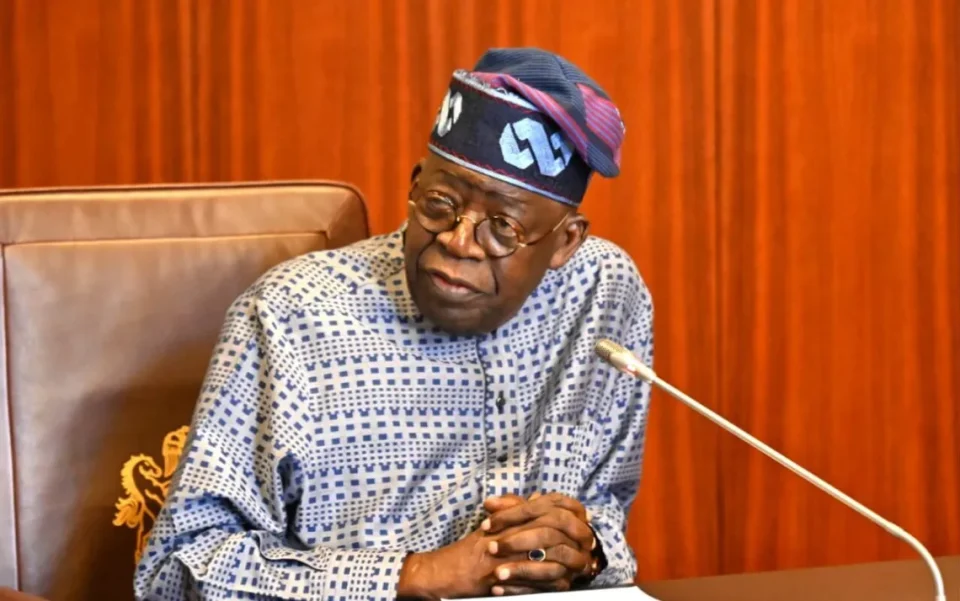
Borrowing, in itself, is neither a virtue nor a vice. It is simply an instrument of economic management. The real issue is whether the borrowed funds are deployed productively to create assets that stimulate growth, expand the productive base of the economy and improve the quality of life of citizens. Judged by this standard, the borrowing strategy of the President Bola Ahmed Tinubu administration deserves a more objective appraisal.
President Tinubu inherited an economy confronted by multiple structural distortions. Years of fuel subsidy payments had bled public finances, foreign exchange practices had discouraged investment, infrastructure deficits had widened, debt servicing had become increasingly burdensome because of weak government revenues, and insecurity had imposed enormous economic costs. Rather than postpone difficult decisions, the administration embarked on bold reforms aimed at rebuilding the economic foundation of the country.
The removal of fuel subsidy, the liberalisation of the foreign exchange market, tax reform initiatives, improved revenue mobilisation and renewed investor engagement have begun to reposition Nigeria’s economy. These reforms were never expected to produce instant miracles. Economic restructuring requires patience, consistency and complementary investments capable of unlocking growth.
That is precisely where strategic borrowing becomes indispensable.
Nigeria cannot bridge decades of infrastructure deficit through annual budgetary allocations alone. Roads, railways, power infrastructure, irrigation facilities, healthcare institutions, schools, ports, housing, digital infrastructure and security architecture require substantial long-term financing. Every nation that has experienced rapid economic transformation has relied, at one stage or another, on carefully managed public borrowing.
The United States, Japan, China, India and several European economies continue to carry debt levels that far exceed Nigeria’s in absolute terms. Their experience teaches a simple lesson: sustainable borrowing is measured not merely by the volume of debt but by the economy’s capacity to generate growth, create wealth and service its obligations.
Nigeria’s challenge has historically been less about excessive debt and more about inadequate revenue generation. This explains why the Tinubu administration is pursuing aggressive tax reforms, expanding the tax net without overburdening compliant taxpayers, digitising revenue collection and eliminating leakages across government institutions. As revenues improve, debt sustainability correspondingly strengthens.
Encouragingly, the early signs suggest that the reforms are beginning to yield positive outcomes. Inflationary pressures, while still a concern, have shown signs of moderation compared with their peak levels. External reserves have improved, providing greater confidence in the nation’s capacity to meet external obligations. Investor confidence has strengthened as international financial institutions and global investors increasingly acknowledge the courage of Nigeria’s reforms. The Nigerian Exchange has remained one of Africa’s strongest-performing capital markets, while renewed interest from both domestic and foreign investors reflects growing confidence in the direction of economic policy.
The renewed confidence is not accidental. International credit rating agencies have acknowledged improvements in Nigeria’s macroeconomic outlook following the administration’s difficult but necessary reforms. Development finance institutions have equally expressed confidence in the country’s reform trajectory through continued financial support and technical partnerships.
These developments matter because they lower borrowing costs, attract private investment and expand access to long-term capital needed for development.
Critics often focus exclusively on the liabilities created by borrowing but conveniently ignore the assets being built. A new highway is not merely a stretch of asphalt; it reduces travel time, lowers transportation costs, facilitates commerce and increases productivity. Modern rail infrastructure expands market access for farmers and manufacturers. Improved electricity transmission enhances industrial competitiveness. Investments in agriculture reduce food inflation and strengthen food security. Better healthcare facilities improve human capital, while quality education prepares the workforce for future industries.
These are productive investments that generate economic returns long after the loans have been repaid.
Borrowing should therefore be evaluated within the broader framework of return on investment. If borrowed funds create infrastructure that stimulates commerce, generates employment, increases tax revenues and expands national productivity, then such borrowing becomes an investment rather than a burden.
The Tinubu administration has also demonstrated prudence by increasingly prioritising concessionary financing from multilateral and development institutions. Such facilities generally come with lower interest rates, longer repayment periods and more favourable terms than commercial loans, thereby reducing fiscal pressure while supporting strategic projects.
Equally significant is the administration’s emphasis on transparency, fiscal discipline and institutional reforms designed to ensure that public funds deliver measurable value. The introduction of tighter expenditure controls, ongoing tax reforms, public procurement improvements and greater emphasis on accountability reflect a commitment to ensuring that borrowed resources translate into tangible development outcomes.
There is also an intergenerational dimension to this conversation. Future generations will inherit not only today’s debt obligations but also today’s infrastructure. They will utilise the roads we build, the railways we construct, the power systems we modernise, the digital economy we establish and the institutions we strengthen. It is therefore economically rational that long-term assets be financed partly through long-term borrowing.
Conversely, refusing to invest because of an aversion to debt simply transfers a different burden to future generations-decrepit infrastructure, low productivity, unemployment, weak institutions and missed economic opportunities. Development postponed often becomes development denied.
As President Tinubu frequently reminds Nigerians, difficult reforms are necessary to build a stronger and more resilient economy. Those reforms require complementary investments, and those investments require financing. Strategic borrowing, prudently managed and transparently deployed, remains one of the legitimate instruments available to responsible governments across the world.
Ultimately, the success of the administration’s borrowing policy should not be judged by the headline size of Nigeria’s debt stock alone. It should be measured by the quality of infrastructure delivered, the jobs created, the investments attracted, the industries revitalised, the revenues generated and the prosperity ultimately shared by Nigerians.
History is kind to leaders who invest boldly in the future rather than those who merely preserve the comfort of the present. President Bola Ahmed Tinubu has chosen the more difficult path of laying enduring foundations for national prosperity. Time, more than politics, will determine the wisdom of that choice.
For now, the imperative before government remains clear: ensure that every borrowed naira creates lasting value. When borrowing finances productivity rather than consumption, it ceases to be a burden. It becomes an investment in the future of a nation determined to rise.
Mogaji Seye Oladejo is a Lagos APC chieftain
