


By Segun Adewale, Bauchi
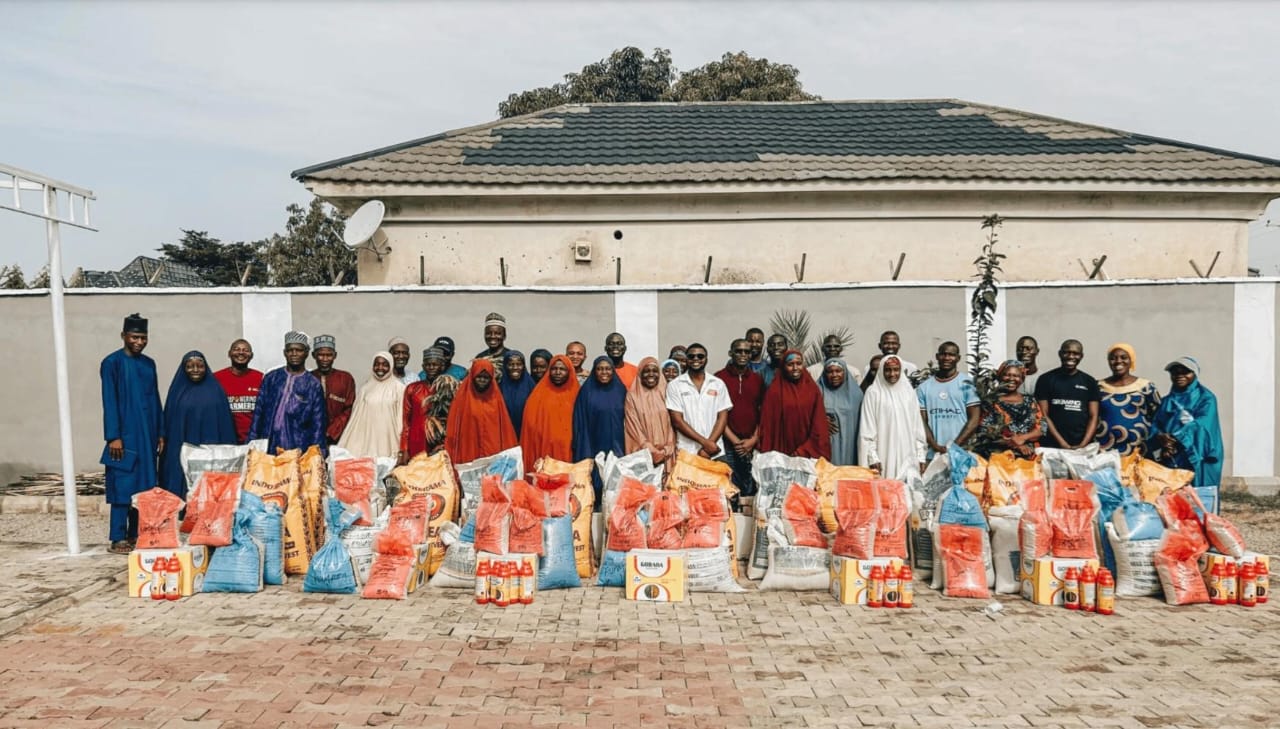
As part of efforts to improve food production and strengthen climate resilience among smallholder farmers, the Foundation for Sustainable Smallholder Solutions, in partnership with the HEINEKEN Africa Foundation, has trained 28 community seed producers and distributed more than 1,000 agricultural inputs to farmers’ hubs across Bauchi State.
The initiative is driven by the Foundation for Sustainable Smallholder Solutions (FSSS) and the HEINEKEN Africa Foundation (HAF) under the Empowerment of Smallholders to Thrive and Build Climate Resilience through Regenerative Agriculture (ESTRRA) Project.
Also, the intervention aims to address limited access to quality agricultural inputs and reduce dependence on informal seed sources among smallholder farmers in northern Bauchi.
The distribution targeted vulnerable farming communities during the 2026 farming season, explicitly reaching Gambaki, Bulkachuwa, Chibiyayi, Diga, Dogon-Jeji, Faggo, and Kurba across the Katagum, Zaki, Giade, Itas-Gadau, Shira, and Jama’are Local Government Areas (LGAs).
Speaking on the intervention yesterday, the Manager of the Bulkachuwa Farmers’ Hub in Katagum Local Government Area yesterday, Mohammed Dahiru, said the support would significantly ease farmers’ access to essential farm inputs.
He said, “Before now, farmers in this community had to travel long distances to buy quality fertilisers, chemicals and other farm inputs. With the Farmers’ Hub now stocked with these products, farmers can access what they need closer to their farms and at the right time.
“This support will make farming easier for many farmers because they can get quality inputs without spending extra money on transportation. We are grateful for the support and will ensure the hub continues to serve farmers effectively.”
In addition to the agro-input distribution, the foundation organised a two-day seed production training in Azare for 28 representatives from seven Community-Based Organisations, with women accounting for more than half of the participants.
The trainees received practical lessons on the production of rice, millet, sorghum, groundnut and cowpea seeds, covering seed quality management, varietal purity, field inspection and certification requirements.
According to the foundation, the training was informed by findings from its 2026 baseline assessment, which revealed that 87 per cent of seeds used by farmers in northern Bauchi were sourced from farmer-saved or local varieties, while only 12 per cent came from improved or certified varieties.
To bridge the gap, each participating organisation received foundation seeds, fertilisers and crop protection products to establish community seed multiplication fields.
The seven organisations are expected to cultivate at least three hectares each, resulting in a minimum of 21 hectares of community seed production fields across the project areas.
While on the training, one of the participants, Abigail Kwila from Katagum Local Government Area, said the training had equipped members with practical knowledge on producing certified seeds.
She said, “Before this training, many of us did not fully understand the requirements for producing quality seed. We have learned about proper seed production practices, certification requirements and how to manage seed production as a business.
“With the foundation seeds and inputs provided, we are confident that we can establish successful seed multiplication fields and make quality seeds more available to farmers in our community.”
The intervention also featured business management training for Farmers’ Hub managers on record-keeping, stock management, pricing, costing and accountability to improve the sustainability of the centres.
Speaking on the project’s long-term objective, the Senior Agronomist at FSSS, Dr Abubakar Hassan, said the initiative was designed to build sustainable community seed systems rather than provide short-term support.
“Our goal is not simply to distribute seeds but to build the capacity of communities to become seed producers themselves. By equipping these organisations with both technical knowledge and production resources, we are laying the foundation for stronger local seed systems that can continue serving farmers long after the project cycle,” he said.
The project distributed fertilisers, herbicides, seed treatment products, crop protection chemicals and knapsack sprayers worth millions of naira to 11 Farmers’ Hubs across seven Local Government Areas of the state.
The beneficiaries are located in Gambaki, Bulkachuwa, Chibiyayi, Diga, Dogon-Jeji, Faggo and Kurba communities in Katagum, Zaki, Giade, Itas-Gadau, Shira and Jama’are Local Government Areas.
