


By Daniel Oluwatobiloba Popoola
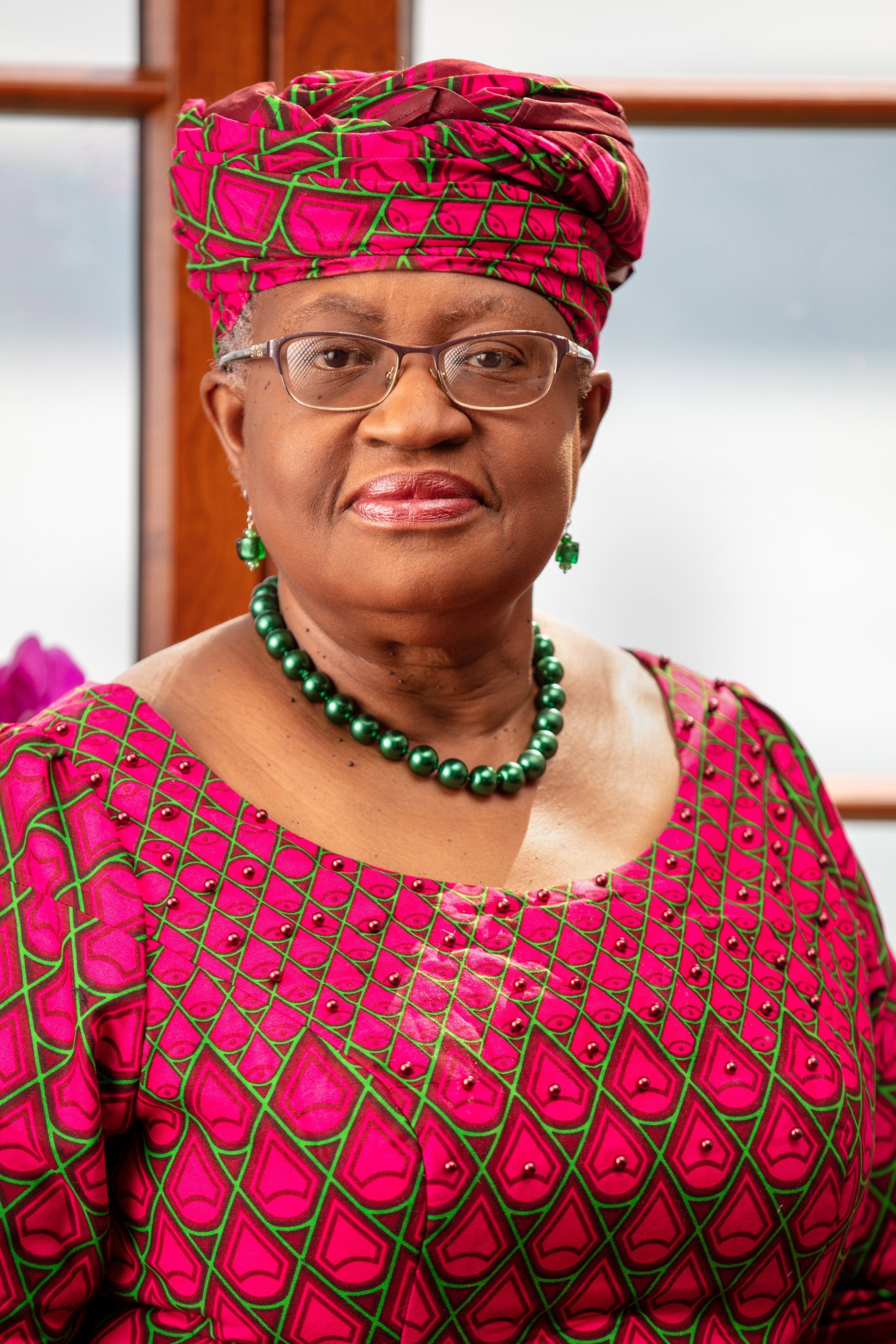
The Director-General of the World Trade Organisation, Dr Ngozi Okonjo-Iweala, has said the current period of geopolitical uncertainty should not discourage developing countries from embracing technology and global trade opportunities, even as the World Bank warned that Nigeria risks missing the artificial intelligence revolution without urgent action.
Okonjo-Iweala spoke on Wednesday,29 July, 2026 at the 7th Africa Emerging Markets Forum in Abuja, organised by the Central Bank of Nigeria in collaboration with the Emerging Markets Forum and the Centre for the Study of the Economies of Africa, arguing that globalisation was evolving rather than disappearing.
She disclosed that global goods and services trade hit a record $34.65tn in 2025, a seven per cent rise over the previous year, noting that 72 per cent of global goods trade still flowed on core WTO most-favoured nation tariff terms.
She urged African countries to leverage AI and the global shift toward supply chain diversification to industrialise rather than remain exporters of raw materials, warning that the continent risked squandering a historic opportunity as geopolitics drove demand for diversified critical mineral supply chains.
The WTO chief also commended the Central Bank of Nigeria’s recent reforms, urging the country to sustain macroeconomic stability while exercising caution in debt management.
Delivering the keynote address at the forum, the World Bank Group’s Chief Economist and Senior Vice-President for Development Economics, Indermit Gill, warned that Nigeria and other developing countries risked missing the AI revolution unless they urgently embraced and adapted the technology to local realities.
He cautioned against letting fears of job losses in advanced economies shape policy in countries like Nigeria, likening the stakes to the Industrial Revolution and warning that nations left behind could stay behind for generations.
Gill argued that AI offered developing countries more opportunity than risk, since it was more likely to complement workers than replace them.
He said AI was evolving faster than previous transformative technologies and remained highly context-specific, making adaptation more critical than simply adopting foreign systems or chasing frontier AI development.
He noted that the highest returns lay in back-end predictive AI, which could significantly improve agriculture, healthcare, education and judicial services, citing gains already recorded in Kenya, Bangladesh and India’s Telangana State.
Gill said only about 10 per cent of jobs in poorer economies were likely to be hurt by AI, against 30 to 40 per cent in advanced economies, dismissing fears of mass unemployment as overstated.
He also rejected concerns that small businesses would be left behind, citing World Bank research showing firms of all sizes in developing countries increasingly adopting AI.
He urged governments to prioritise predictive AI, invest in digital infrastructure and skills, promote interoperability between AI systems and back industry-led standards over strict regulation, stressing that no country could out-spend the US and China, making interoperability the more practical route for nations like Nigeria.
Also speaking, Central Bank of Nigeria Governor, Olayemi Cardoso, said Africa must move beyond consuming technology to producing AI-driven solutions, stressing the need to develop African answers to African problems.
He named AI as one of three global shifts reshaping the continent’s future, alongside trade fragmentation and increasingly selective capital flows.
Cardoso said Africa must invest in reliable electricity, affordable connectivity, digital infrastructure and AI-ready talent to compete globally, while strengthening regional trade through the African Continental Free Trade Area.
He also cited Nigeria’s recent reforms, including exchange rate unification, improved forex market transparency and tighter monetary policy, as measures that had strengthened external buffers and restored investor confidence.
