


The United Nations has warned that millions of Nigerians facing food insecurity, malnutrition and disease outbreaks could miss critical humanitarian assistance as the country’s 2026 humanitarian response grapples with a $159 million funding shortfall.
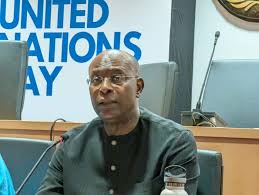
The UN Resident and Humanitarian Coordinator in Nigeria, Mohamed Fall, raised the alarm on Wednesday in Maiduguri as the United Nations marked World Humanitarian Day and called for urgent additional support from international donors, the Nigerian government, the private sector and other stakeholders.
Fall said Nigeria’s Humanitarian Needs and Response Plan had been severely underfunded despite the growing scale of humanitarian needs, with hundreds of thousands of vulnerable people at risk of losing access to lifesaving assistance during the remainder of the year.
“Needs continue to rise faster than available resources,” Fall said, stressing that current funding represented only a fraction of what was available to humanitarian operations in previous years.
The warning came after Fall and members of the UN and Humanitarian Country Teams visited nutrition and cholera treatment centres in Maiduguri, where they met health workers, humanitarian personnel, caregivers and patients.
The delegation witnessed first-hand the humanitarian response to the crisis in Nigeria’s northeast, which reached almost 900,000 people during the first half of 2026 despite dwindling financial resources.
According to the UN, $135.5 million has so far been distributed in 2026 through the Nigeria Humanitarian Fund and the Central Emergency Response Fund to respond to emergencies across the country.
However, additional contributions are urgently required to bridge the funding gap and sustain critical interventions as humanitarian needs intensify during the lean and rainy seasons.
Fall particularly highlighted the situation in Borno, where government authorities, health workers and humanitarian organisations have mounted a coordinated response to an ongoing cholera outbreak.
He disclosed that more than 55,000 cholera patients had been treated, while hygiene promotion services had reached more than one million people.
Humanitarian partners and authorities have also chlorinated more than 500 water points to improve access to safe drinking water and curb further transmission of the disease.
Fall said the combined response had helped reduce the cholera case fatality rate to below emergency levels, but warned that continued intervention would be essential to prevent further loss of life.
Beyond the funding crisis, the UN used World Humanitarian Day to demand greater protection for aid workers operating in Nigeria and other conflict-affected areas.
Fall commended thousands of humanitarian personnel working across Nigeria, particularly those serving communities in difficult and dangerous environments.
He said attacks or restrictions against humanitarian personnel directly affected vulnerable communities by preventing assistance from reaching people who need it most.
“Humanitarian workers are not targets. Hospitals, treatment centres, relief supplies, assistance convoys and civilian infrastructure must be protected,” he said, calling on all parties to respect international humanitarian law.
He stressed that safe and unimpeded humanitarian access was both a moral imperative and a legal obligation.
“When humanitarian workers cannot safely reach communities with assistance, it is vulnerable women, men and children who suffer the consequences,” Fall said.
The UN coordinator also drew attention to Nigeria’s planned transition towards a more nationally led humanitarian system, describing the process as an opportunity to strengthen national ownership and reduce dependence on international humanitarian operations.
He called for greater investment in Nigerian institutions and local organisations already providing assistance on the front lines, while urging stronger domestic mobilisation of resources amid declining international donor funding.
“Nigeria’s evolution towards a nationally led humanitarian system is both necessary and an enormous opportunity for the country to do things differently,” he said.
Fall, however, cautioned that the transition must be adequately funded and carefully managed, with the needs of affected communities remaining at its centre.
He urged governments, donors, civil society organisations and the private sector to increase their support, warning that behind the humanitarian statistics were families struggling to survive, children battling malnutrition and communities still recovering from years of crisis.
The UN’s appeal comes as Nigeria enters another difficult humanitarian period, with the combination of food insecurity, disease outbreaks, displacement and seasonal vulnerabilities placing additional pressure on already stretched response systems.
Fall said sustained support would be necessary to ensure that humanitarian organisations can continue delivering essential assistance to vulnerable Nigerians through the remainder of 2026 and as the country moves towards a more locally led humanitarian response in 2027.
